Precision Laser Cutting for Small Parts

Great Lakes Engineering is excited to announce their extended services and capabilities with the purchase of a new flatbed fiber laser cutting machine. This laser is a great addition to our current laser line-up. The LaserCube is a reliable and versatile laser cutting system that can benefit a variety of businesses that need precise cuts on a wide range of materials.This machine increases our cutting capabilities as well as our capabilities to cut new types of metal.

Flatbed Fiber Laser Cutting

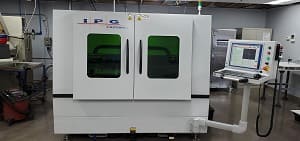
LaserCube Open

The LaserCube is a flatbed fiber laser cutting system designed and optimized for fast and reliable precision cutting of small parts. Using high-force linear motors built on a granite stage, it has the stability and acceleration needed for high-speed precision machining.

The LaserCube is truly a general-purpose laser cutting system: high-velocity stages and high continuous wave (CW) power lasers provide the fast cutting of carbon steel parts and reflective metals such as steel, aluminum, brass, copper, titanium and alloys.

Versatile Cutting Solutions for Various Metals

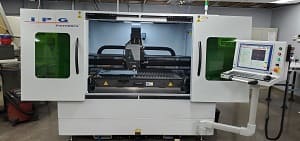
LaserCube Work Area

The LaserCube can cut through a wide range of materials. The high beam quality and energy efficiency make it a versatile cutting solution for various materials and thicknesses.

Metals: Its high-powered fiber laser is particularly well-suited to cutting metals, such as steel, aluminum, brass, copper, titanium and alloys, with high precision and speed.

Thickness: It is also designed to increase our cutting thickness range from the maximum of .030” up to .060”

Overall, the LaserCube's excellent cutting performance is due to its high-powered fiber laser, advanced scanning technology, and precise control system. These features enable it to produce high-quality cuts with excellent speed, accuracy, and consistency on various materials.

Laser Cutting for Complex Parts

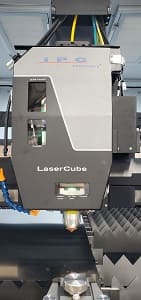
LaserCube Cutting Head

LaserCube’s system control is the key to flexibility. Its stored process parameters allow for precise setting and automatic adjustment of its laser power based on changes in its cutting head velocity for complex contoured parts. The system has computerized control of two process gasses, with automatic monitoring of cutting head conditions. With many alloys or higher-value metals only available in smaller-size sheets, the 48 inch (1225 mm) cutting bed of the LaserCube is optimally sized for economic material processing.

One of the key advantages of the LaserCube is its ability to cut complex shapes and contours with high accuracy. The system uses a high-speed scanner to direct the laser beam, allowing precise control of the cutting path. This makes it ideal for cutting intricate parts and components and producing high-quality finished products.

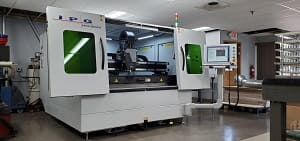
LaserCube Ready for Work

Laser Cutting for a Variety of Applications & Industries

The LaserCube has several configurations with different power levels and capabilities. Additionally, due to its high-performance, versatility, and reliability, the LaserCube has already been discovered as a cutting solution that offers excellent value for various industries and applications, including:

Automotive industry

The LaserCube is used to cut various metal parts for the automotive industry, including chassis components, body panels, and engine parts. Its high precision and fast cutting speeds make it an ideal solution for automotive manufacturers who need to produce parts quickly and efficiently.

Aerospace industry

The LaserCube is also commonly used in the aerospace industry for cutting metal parts for airplanes, rockets, and other aerospace applications. Its ability to accurately cut complex shapes and contours makes it an ideal solution for producing intricate aerospace components.

Medical device manufacturing

The LaserCube is used to cut various materials for medical device manufacturing, including stainless steel, titanium, and various plastics. Its high precision, and clean cuts make it an ideal solution for producing medical device components surgical instruments, and diagnostic tools, that need to meet strict quality standards.

Electronics manufacturing

The LaserCube can also be used for cutting and drilling various materials used in electronics manufacturing, including circuit boards and semiconductor materials. Its high precision, and ability to cut intricate shapes make it an ideal solution for producing small electronic components.

Architectural and decorative applications

The LaserCube is used to cut various materials for architectural and decorative applications, including metal panels and tiles. Its ability to produce intricate designs and patterns with high accuracy makes it an ideal solution for producing high-quality decorative elements.
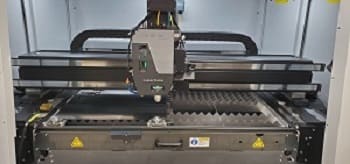
IPG Photonic Corporations LaserCube Laser Cutting System

LaserCube Working

The LaserCube is based on IPG's proprietary fiber laser technology, which provides high beam quality, energy efficiency, and reliability. It uses a high-speed scanner to direct the laser beam, which allows for the precise cutting of complex shapes and contours. It also features an automatic focusing system that ensures consistent cutting performance, even on materials with uneven surfaces.

IPG's Proprietary Fiber Laser Technology

IPG Photonics Corporation's proprietary fiber laser technology is a key feature that sets the LaserCube apart from other laser cutting systems on the market. Here are some key details about the technology:

Fiber Laser Technology

IPG's fiber lasers are based on a solid-state design that uses a fiber-optic cable to deliver the laser beam. This design offers several advantages over traditional CO2 lasers, including higher beam quality, greater energy efficiency, and longer lifetimes.

High Beam Quality

The LaserCube's fiber laser produces a high-quality beam that is tightly focused and has a small spot size. This allows for high-precision cutting of complex shapes and contours, clean edges, and minimal thermal distortion.

Energy Efficiency

The LaserCube's fiber laser is highly efficient, with lower power consumption than traditional CO2 lasers. This results in lower operating costs and reduced environmental impact.

Reliability

IPG's fiber lasers are known for their long lifetimes and high reliability. They are designed to operate continuously for extended periods with minimal maintenance, reducing downtime and increasing productivity.

Overall, IPG's proprietary fiber laser technology provides the LaserCube several advantages, including high beam quality, energy efficiency, reliability, and power scalability. These features make the LaserCube a powerful and versatile laser-cutting system that can handle various materials and applications.

Enhanced Processing Range for Thin Metals

The flatbed fiber laser increases our cutting thickness capability from 0.030 inches to 0.060 inches, expanding the types of components we can support. This improvement allows for greater flexibility when working with stainless steel, aluminum, brass, copper, titanium, and specialty alloys that require stable processing at higher thicknesses.

The system’s beam quality and energy efficiency enable consistent performance on reflective metals, which are traditionally challenging for other laser platforms. This supports a broader range of part geometries and material combinations without compromising accuracy.

Automated Control for Intricate Geometries

The system uses stored process parameters to automatically adjust laser power based on cutting head velocity. This ensures stable performance on contoured outlines, tight radii, and detailed features. Automated gas control and continuous monitoring of cutting head conditions further support consistent results across extended production runs.

With a 48 inch cutting bed, the platform is optimized for smaller sheet formats commonly used for high value metals. This reduces material waste and supports efficient processing of compact components.

Fiber Laser Architecture for High Value Metals

The platform is built on IPG Photonics’ fiber laser technology, which provides strong beam quality, long operational life, and reduced maintenance requirements. The tightly focused beam supports fine features and clean edges, while the system’s energy efficiency lowers operating costs and reduces environmental impact.

Automatic focus control maintains consistent performance on materials with surface variations, supporting stable cutting across different alloys and thicknesses.

FAQ

How Does the Flatbed Fiber Laser Improve Small Part Production?

Its high quality beam, stable motion platform, and automated controls support detailed features, narrow kerf widths, and consistent accuracy on compact components.

What Thickness Range Can the System Process?

The platform increases our cutting capability from 0.030 inches to 0.060 inches, supporting a wider range of thin metals.

Why Is Fiber Laser Technology Effective for Reflective Metals?

Fiber lasers maintain strong beam quality and energy efficiency, allowing stable processing of aluminum, copper, brass, and other reflective alloys.

Is the System Suitable for Both Prototype and Production Runs?

Yes. Automated parameter control and high speed motion support rapid prototyping while maintaining repeatability for high volume production.